When the February 2021 winter storm strained the ERCOT grid and knocked out power across North Texas, a lot of business owners learned the same lesson at the same time: a backup generator only helps if it was installed before the outage. Freezing temperatures, frozen pipes, spoiled inventory and days of lost sales hit businesses that had no backup power, and generator lead times stretched for months afterward.
If your business can’t afford to go dark, the time to plan a commercial standby generator is now, while the weather is mild. C and F Electrical has installed commercial generators across North Texas since 1977. This guide explains how commercial generator sizing works, what decisions you’ll need to make, and how to get a standby generator for your business in place before the next storm.
Why North Texas Businesses Need Backup Power
Outages in North Texas aren’t only a winter problem. Ice storms, severe thunderstorms, high winds and grid strain during summer heat waves can all cut power to a business. For many operations, even a few hours without power is expensive:
- Restaurants and grocery stores can lose refrigerated and frozen inventory
- Medical and dental offices may have to cancel patients and protect equipment
- Warehouses and manufacturers lose production and can miss shipments
- Retail stores lose sales, and security systems and cameras go offline
- Offices lose phones, data and network access, and staff can’t work
A properly sized commercial generator installation keeps the loads that matter running automatically, often within seconds of an outage.
How Commercial Generator Sizing Works

Commercial generator sizing is the most important decision in a generator project. Too small, and the generator overloads or can’t start your largest equipment. Too large, and you pay for capacity you never use. C and F Electrical handles commercial generator sizing for every project with the same basic process.
1. Decide what has to stay on
Start with a simple question: what must keep running for your business to stay open, safe and protected? That list usually includes refrigeration, security and fire systems, network and phone equipment, some lighting, and any equipment that is costly to shut down or restart.
2. Build a load list
Next, we measure or calculate how much power each of those loads uses. We look at nameplate data, your electrical panels and, when needed, actual metered readings. The total is the starting point for commercial generator sizing.
3. Account for starting loads
Motors, compressors and HVAC equipment draw much more power for a moment when they start than when they run. A generator has to handle those starting surges, especially when several pieces of equipment start at the same time. This is the step most often missed in commercial generator sizing, and the most common reason a generator ends up undersized.
4. Plan for growth
If you expect to add equipment, square footage or tenants, it is usually cheaper to build that growth into your commercial generator sizing now than to replace the generator later. We’ll help you find a sensible margin without overspending.
Whole-Building vs. Critical-Load Backup
There are two common approaches, and the one you choose changes your commercial generator sizing. Whole-building backup powers everything, so your business runs as if nothing happened. It requires a larger generator and transfer equipment sized for the full electrical service. Critical-load backup moves only selected circuits to a separate panel that the generator feeds. It costs less and still keeps the essentials running. C and F Electrical can price both so you can choose based on real numbers.
Fuel, Transfer Switches and Placement
- Fuel type. Natural gas generators run as long as the gas supply holds and don’t need refueling. Diesel units store fuel on site and are common where natural gas isn’t available.
- Automatic transfer switch. An automatic transfer switch detects the outage, starts the generator and transfers your loads with no one on site.
- Placement. The generator location affects noise, exhaust, access for maintenance and the length of the electrical and fuel runs, so it is planned early.
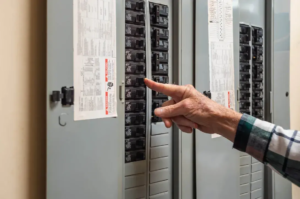
- Your existing service. Older electrical services may need work before a generator can be connected. If so, a commercial electrical panel upgrade can be done as part of the same project.
Don’t Wait for the Next Storm
Generator projects take time. Equipment has to be ordered, utilities and fuel suppliers coordinated, and the installation inspected. The businesses that had power in 2021 were the ones that planned ahead. If you start now, your system can be installed, tested and ready well before the next winter storm or summer peak.
C and F Electrical handles the full project: site walk, load calculation, generator and transfer switch selection, installation, permitting, inspection and startup. As a family-owned, licensed Texas electrical contractor (TECL #18170), we have been keeping North Texas businesses powered since 1977. We also offer design-build electrical services when your generator is part of a larger project.
Commercial Generator FAQs
What size generator does a commercial building need?
It depends on which loads must stay running during an outage. C and F Electrical builds a load list of your critical equipment, accounts for the extra power motors and compressors draw when they start, and adds room for growth. A small office may only need a unit for lights, data and refrigeration, while a restaurant or warehouse may need much more.
Should my business back up the whole building or only critical loads?
Whole-building backup keeps everything running but costs more and needs a larger generator. Critical-load backup powers only what keeps you open and safe, such as refrigeration, security, data and a few lights and outlets. Many North Texas businesses choose critical loads. C and F Electrical can price both options so you can compare.
What is an automatic transfer switch and do I need one?
An automatic transfer switch senses when utility power fails, starts the generator and moves your loads to it within seconds, then switches back when utility power returns. For a commercial standby generator it is strongly recommended, because no one has to be on site to start the system, including overnight and on weekends.
When is the best time to install a commercial generator?
Before you need it. Equipment lead times, utility coordination and inspections all take time, so the best window to start is in the off-season, well before winter storms or summer peak demand. C and F Electrical can walk your site and give you a realistic timeline for your project.
Does a standby generator need regular maintenance?
Yes. A standby generator should be exercised on a schedule and inspected regularly, including the battery, fuel system, fluids and transfer switch. A generator that sits untested is the one most likely to fail when the grid goes down. C and F Electrical can set up a maintenance plan after installation.
Ready to protect your business from the next outage? Call C and F Electrical at (972) 771-1131, Monday–Friday, 7:00am–5:00pm, or request a consultation online.